High-density Microarrays Help Oral Cancer Scientists Develop New Ways to Predict and Treat Disease
by Tommy Broudy
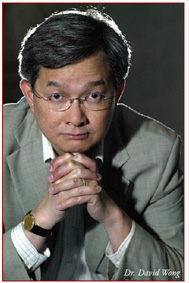 UCLA's Dr. David Wong and UPenn's Rebekah O'Donnell discuss biomarkers and disease mechanism for oral squamous cell carcinoma Scientists from the University of California Los Angeles (UCLA) and University of Pennsylvania (UPenn) are now using microarrays to perform the most detailed scan of the oral cancer genome ever undertaken. But they're approaching their studies with two different endpoints—finding new ways to predict disease and finding new ways to treat it. Dr. David Wong, associate dean of research at the UCLA School of Dentistry, is leading a research group that's using new genomic and proteomic technologies to discover salivary markers that distinguish oral cancer patients from healthy controls; their goal is to develop a salivary diagnostic for oral cancer. “The Holy Grail is for early cancer prediction,” said Wong. “The problem with saliva has beenthat the analytes—the potential markers of disease—are present at very low magnitudes and are often below the limits of detection of an [enzyme-linked immunosorbent assay] ELISA, for example. Technology has changed that now.” While finding predictive markers is critical for early-detection efforts, discovering the underlying pathways that cause disease and then developing ways to block those pathways often requires a different study focused on a different endpoint. Rebekah O'Donnell, a pre-doctoral fellow in Dr. Ruth Muschel's laboratory in the Immunology Graduate Group at the UPenn, is using the same microarray technology as Wong, but her studies investigate the molecular pathways that govern oral squamous cell carcinoma (OSCC), potentially leading to new targets for drug design. 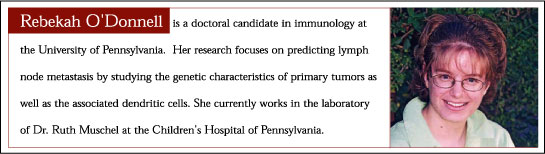
AMB recently spoke with Wong and O'Donnell about the common challenges they face: statistical analysis methodologies, data validation techniques, and the role of new methods and emerging technologies in improving signatures. Analysis methods
As the selection of statistical analysis packages for microarray data continues to grow—self-organizing maps, Fisher discriminant analysis, and logistic regression models comprise just a sample—choosing the right algorithm is critical. Wong: We've used a number of tools, but by and large we really don't know which one of these will identify markers that are most discriminatory and validatable. That really is the six million dollar question! We started with S-plus, MAS 5.0 and dChip on the U133A data that was in the paper. Now we use the U133 Plus 2.0 set, and of course we're really looking forward to the new all-exon array which we'll hopefully start with in a month or so, and pass these data through all three of these classifying programs. And from that data, based on a number of statistical criteria—p-value fold change and percent present in a number of individuals—we use the discovery sets and identify candidate RNAs in saliva that are most discriminatory in a statistical sense. That's the discovery phase. And the next thing is to take these candidate markers and validate them in an independent population. 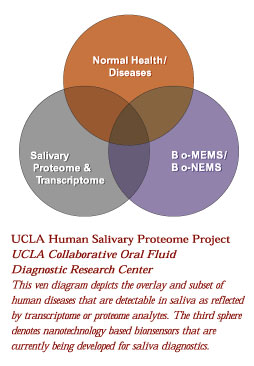 What we have learned so far, in the use of oral fluid for transcriptome analysis, is that dChip is very, very useful. It seems to yield the most discriminatory and validatable data in our Phase II analysis and is the most useful in yielding validatable RNA biomarkers in saliva for diagnostic applications. Our biomarker validation approach is based on the Early Disease Research Network five-phase model from the Journal of the National Cancer Institute (JNCI) paper in 2001.
O'Donnell: I agree with David that we just don't know the best method, and that's what makes all this difficult. I spent six months working with various tools and my general perception now is that I'm not a big fan of unsupervised clustering, which I think is starting to go out of style. Most of the very early papers use hierarchical clustering and various other kinds of clustering and the later analyses on those methods have shown that they're not very robust or stable, so I don't approve of them at all anymore. But which supervised method to use, and where to get your initial gene list, is a very difficult question, and that's something that we're going to have to learn as we go along. I see the bar being raised in the microarray papers, but the statistics have to be stronger and the data sets have to be bigger. I think we're waiting for the mathematicians to really do their thing—to work on neural networks and meta-analysis. Knowing what the best method is—that's probably several years away. The most important thing is validation. If you can't validate it, then you know it's not good. But if you can validate it, it's hard to argue that it's bad. Data validation
Many scientists use leave-one-out cross validation (LOOCV) for data validation. However, the gold standard remains validating on a truly independent population. Wong: We absolutely need to do independent validation and that's the beauty of this five-step validation process. You know, we went only to a Phase II in that paper. In terms of the validation tool here, we have a Phase III detection trial that is currently ongoing. We are accruing 100 individuals and it is going to be a blinded study. But for an initial validation of our model, David Elashoff, a statistician that we work with, helped us with LOOCV. O'Donnell: We used LOOCV as well. We consider it a kind of trip wire. If your initial testing set passes leave-one-out validation then it's worth going on to validate it, but if it doesn't survive, then you have a problem and you need to go back and look at your work. Unfortunately, a lot of studies have used LOOCV just on their original testing set and consider that a sufficient validation, but I think we're all pretty clear at this moment that we don't consider that to be sufficient anymore. There really should be two kinds of validation though. First, you need a completely independent data set on your microarray that shows that your findings are reproducible. And then you need a molecular technique, which could be quantitative RT-PCR or which could be immunohistochemistry, and that shows that your findings are real. And you really need both of those to have a really high quality finding. 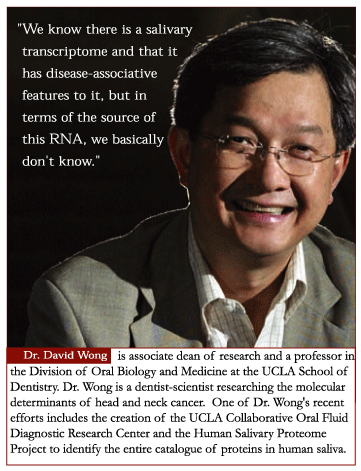 Wong: For what we do, the process here is fairly similar. But, I just want to add one idea here. In terms of our biomarker work, we approach it with an orientation towards diagnostic development. One can certainly embark on it on a direction of the mechanism of biology. And when biology is involved, there is no question one needs to have an additional level of validation, and that is at the proteomic level—at the protein level.
What I want to point out is that in terms of diagnostic or potential utility of these markers for disease association, the presence or absence of a panel of markers with disease phenotype—given a strong enough statistical association—could serve as an important endpoint. So, there are some subtle and perhaps obvious differences here, and the endpoint often has a bearing in terms of how far one needs to go in terms of validation. Origins of salivary RNA
The cellular source of RNA used for microarrayanalysis can be one of the most important factors in experimental analysis; however, there are some major differences in diagnostic versus disease mechanism studies. Wong: We have many, many questions that we need to answer, and we're beginning to work on them. We know there is a salivary transcriptome and that it has disease-associative features to it, but in terms of the source of this RNA, we basically don't know. But let me talk about the kind of experiments we're currently doing to find out. We have stratified saliva into the five sources: from the three major salivary glands (parotid, submandibular and sublingual), and also from a space between the tooth and the gum, called the gingival crevicular fluid (GCF), and also from desquamated epithelial cells. And we profiled each one of these sources and found RNA to be in each one. Now, beyond that, we're currently tracking it. We're also using rodent models, where we implant human cells—non-metastatic tumor cells—into distal parts of the rodent. So we use human cells in a mouse background and then try to track tumor growth. Once a tumor is formed—it takes about three to four weeks—we compare the RNA profile of the implanted tumor and also look at the presence of human RNA in the circulation of these mice, as well as in their oral fluids. Presently, our research is merely 18 months along and I think the data will come out fairly soon and hopefully these questions will be addressable. For diagnostic purposes, I think it doesn’t really matter where the RNA comes from, because the key factor you're looking for is just the presence of a disease-associative RNA signature, one that is always there associated with the disease, e.g. oral cancer. That's good. That's what a clinician needs to know and what a diagnostic kit needs to be able to determine. That's what a diagnostic company needs to know, if you have the sensitivity and specificity and can control all the confounding factors.
O'Donnell: But if you want to design a treatment based on the ribosomal RNA and what it's doing, you have to go back and figure out what's going on. Wong: Absolutely. O'Donnell: Right now we're doing a lot of immunohistochemistry, looking at the presence or absence of certain molecules in certain cells in the tumor and then going back to try and correlate that with the presence or absence of metastasis. And there are issues with those experiments as well because it's a static system. We can see it, but we can't change anything. So then we have to go back to the mouse models. So I agree with David—the goal is to get a picture of how this process works, because once we thoroughly understand how it works, we should be able to do something about it. We're all coming at that from slightly different directions and different strengths, but hopefully we're all going to end up in the same place. Improving Signatures
Current studies scan for transcriptional activity in nearly all known coding genes; however, by looking at the genome at greater detail, for instance by analyzing splice variation, scientists may be able to develop more specific signatures and more robust classifiers. Wong: So far we are capturing only a fraction of the information from saliva. We know for certain that about 50 percent of the transcripts in saliva are devoid of a poly-A tail. So, using a T7-oligo dT primer in linear amplifications, we miss half of that information based just on that fact alone. And if you consider all the other degradative mechanisms of RNAeither decapping or clipping a piece of RNA in the middle—we'll miss more than 50 percent of those. We are very excited and looking forward to the upcoming all-exon array—we are on the early-access program—because every coding sequence will have multiple 25mers tiled to it, so that, theoretically, every fragment of RNA in a biological fluid or tissue will be registered or captured. We're coupling this with an alternative amplification procedure, because using an oligo-dT procedure still requires RNA with a poly-A tail. The degraded RNA in saliva often don't have this tail, so we're currently experimenting with a German company, Artus, using an alternative amplification procedure for quote-unquote 'less than optimal RNA.' O'Donnell: This array may potentially be the end of the arms race. A lot of the difficulty with comparing various papers is that they're all on different incarnations of microarrays. If there could be a consensus of what we're actually looking at—if we could really get everything—then I think that would go a long way to achieving standardization, which is one of the chief issues that we're facing. Different expression analysis approaches: biomarkers vs. mechanism of disease | | Wong: There's a national initiative to turn salivary diagnostic into a reality. The National Institute of Dental & Craniofacial Research (NIDCR) has invested $57 million into the extramural research community to do two things. One part is to build biosensors that can detect basically anything that's detectable in saliva—seven groups are funded to do that, including UCLA. The second part is to decipher the entire salivary proteome—to know all the proteins in saliva. Three groups are funded to do that, including UCLA. Once we decode the salivary proteome, we can use it as a roadmap to identify people with diabetes, Alzheimer's or major cancers and develop technology for screening and diagnostic applications. Saliva is not a segregated fluid in our body. Saliva is part of our circulation; physiologically, saliva is a filtrate of our blood, moving through the salivary gland into the oral cavity. Analytes that are known to be present in blood are present in saliva. That is a fact that we've known for decades. The problem is that these analytes are present in saliva at levels that are magnitudes lower than in blood. Therefore, ELISA cannot pick out informative salivary proteins. Technology has changed that, so we're looking at a new opportunity to use this non-invasive fluid, which basically has not been touched very much, unlike urine or blood. So the question was: 'What RNA are in saliva?' What Charles Zhou—who works with me at UCLA—found, is that there are 3,000 species of RNA in the saliva of normal individuals like us. Interestingly, 185 of those were common in all normal individuals. That work was done two years ago using U95A microarrays. For a proof-of-concept experimental study, we thought we needed to find a disease that happened close to the spit, or close to the mouth, | and oral cancer is a logical choice. Additionally, we have clinical access to material here. That pilot study was published on December 15 last year in Clinical Cancer Research. Using a small population—32 cancer subjects and 32 matched-control subjects—we found that there are a handful of salivary RNA markers that could distinguish whether a sali-va is from an oral cancer individual or from a control subject with 91 percent sensitivity and specificity. Obviously, this is a pilot study, but it gave us the early, encouraging result that there's RNA in saliva, and that these RNA signatures are disease-associated. O'Donnell: We're actually using OSCC more as a model than an endpoint. And OSCC is a fantastic model because it doesn't have the conflicting distant metastases that exist in many other types of cancer, like breast cancer and lung cancer. If you find a signature for metastasis in those cancers, it's hard to be completely sure if you're looking at lymphatic metastasis or distant metastasis. But now that a few groups, including ours, are looking at cancers that primarily metastasize to the lymph nodes, the specific lymphatic signatures are starting to come out. We're also doing some work modeling lymphatic metastasis in the mouse, and our goal is to eventually understand why lymphatic metastasis happens and what factors in the host may encourage or discourage it happening in a particular patient. And if we can identify it quickly, then we can change treatment. In OSCC, there are some non-metastatic patients who receive unnecessary neck dissections; they could just be treated with chemotherapy, which is much less invasive. There are also patients whose lymph node metastases are missed, and so we hope that by finding this signature, we'd be able to eventually change the clinical treatment to make cancer treatment more effective for these patients. |
FOR MORE INFORMATION | Contact Information
![]() David Wong, DMD, DMSc
UCLA Medical Center Box 957187, A7-224 CHS Los Angeles, CA 90095 ![]() Rebekah O'Donnell
915 Abramson Research Center, Children's Hospital of Philadelphia 34th Street and Civic Center Boulevard Philadelphia, PA 19103 Companies
![]() Artus Inc.
![]() Affymetrix Inc. Organizations:
![]() University of California Los Angeles
![]() University of Pennsylvania
![]() Children's Hospital of Philadelphia
![]() National Institute of Dental and Craniofacial Research Background
![]() UCLA Collaborative Oral Fluid Diagnostics Research Center
![]() UCLA Human Salivary Proteome Project | Further Reading
![]() Hu S, Xie Y, Ramachandran P, Ogorzalek Loo RR, Li Y, Loo JA, Wong DT. Large-scale identification of proteins in human salivary proteome by liquid chromatography/mass spectrometry and two-dimensional gel electrophoresis-mass spectrometry. Proteomics 2005; 5:1714-28.
![]() Li, Y, Zhou, X, St. John, M, and Wong, DT. RNA Profiling of Cell-free Saliva Using Microarray Technology. J Dent Res 2004; 83:199-203.
![]() Li Y, St John MA, Zhou X, Kim Y, Sinha U, Jordan RC, Eisele D, Abemayor E, Elashoff D, Park NH, Wong DT. Salivary transcriptome diagnostics for oral cancer detection. Clin Cancer Res 2004; 10:8442-50.
![]() O'Donnell, R, Kupferman, M, Wei, SJ, Singhal, S, Weber, R, O'Malley Jr., B, Cheng, Y, Putt, M, Feldman, M, Ziober, B, Muschel, RJ. Gene expression signature predicts lymphatic metastasis in squamous cell carcinoma of the oral cavity. Oncogene 2005; 24:1244-51. | ![]() Pepe MS, Etzioni R, Feng Z, Potter JD, Thompson ML, Thornquist M, Winget M, Yasui Y. Phases of biomarker development for early detection of cancer. Journal of the National Cancer Institute 2001; 93:1054-1061.
People
![]() David Elashoff, PhD
UCLA School of Public Health 21-254C CHS
Los Angeles, CA 90095-1570 ![]() Xiaofeng C. Zhou, PhD
UCLA School Of Dentistry
10833 Le Conte Ave.
Room 73-107 CHS
Los Angeles, CA 90095-1668
Tools for download
![]() S-Plus
![]() MAS 5.0
![]() dChip |
|

