100,000 SNP Copy Number Studies Find New Genes Linked to Cancer
by Wes Conard
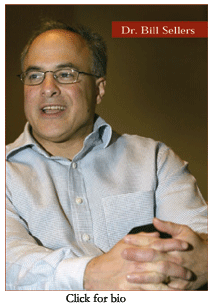
Dana-Farber's Dr. Bill Sellers and UPenn's Dr. John Maris discuss the challenges of high-density SNP genotyping in copy number analysis  Chromosomal copy number and loss of heterozygosity (LOH) studies analyzing more than 100,000 single nucleotide polymorphisms (SNPs) are generating promising new results in the search for cancer-causing genes that are mutated, missing or duplicated. While both methods have been around for awhile, by using high-density SNP microarrays to conduct these experiments, scientists can now search the genome faster and in greater detail than ever before.
Dr. Bill Sellers together with his colleague Matthew Meyerson, both of the Dana-Farber Cancer Research Institute, were among the first scientists in the world to use genotyping microarrays for cancer copy number research. A few years later, Seller's has upgraded from studying a few thousand SNPs with a microarray to studying more than 100,000. And Seller's recently reported a critical gene, MITF, that was amplified in 20 percent of metastatic melanoma patients studied and was also functionally required to transform human melanocytes. Dr. John Maris, an associate professor at the University of Pennsylvania's (UPenn) School of Medicine studies pediatric cancer and in particular the correlation between DNA copy number aberrations and tumor genotype and clinical phenotype. "We're very interested in understanding the pattern of genomic alterations and how they associate with tumor aggressiveness," said Maris. "The potential of SNP arrays is in having a very high-resolution survey of the entire genome, and that resolution continues to increase. That's why the SNP chips are a very attractive platform for cancer genomics." While technological advances in genotyping density have helped both researchers find new genes linked to disease, the advances have also generated a new set of challenges. Sellers and Maris recently discussed some of these emerging issues with AMB; topics included: - Methods for dealing with cellular contamination during sample preparation
- The merits of differing copy number analysis technologies
- Ways to improve copy number algorithms and assays for cancer-specific research
- The value of higher-density SNP analysis in resolving haplotype structure within the cancer genome and the contribution of germ-line polymorphisms to disease
 Sample preparation and sample purity
Sellers: The challenges of array-based genotyping for copy number analysis are mainly due to sample preparation. To get the maximal amount of information across the array currently requires a highly purified tumor cell population, especially if you want to get accurate calls and accurate determination of LOH.
That's actually the rate-limiting step right now for common solid epithelial cancers where the cancer cells are intermixed with stroma. The primary challenge has been to optimize conditions of laser-capture microdissection and amplification of the DNA. Initially, the informatics was the biggest challenge, but we've made a lot of progress there and it no longer poses a great challenge for us. Maris: Currently, each of our labs spends quite a bit of time carefully preparing high-quality DNA out of carefully acquired and prepared samples. But to take this to the next step, to really get at the 99 percent of human cancer samples that aren't archived in a way that's amenable to developing high-quality DNA probes, that's really going to be a challenge. The big question is: 'Can you do this in paraffin?' And right now, the answer is, 'no.' But the lab efforts are going to be directed towards either getting high-quality DNA probes out of sub-optimal tumor preparations and/or finding an assay that allows lower-quality DNA probes to work. Sellers: I agree with all of those points; paraffin is a big obstacle. Pluses and minuses of copy number analysis technologies: SNP arrays and CGH
Maris: I have two specific examples I can give you from our own work. First, using a BAC array platform we identified a homozygous deletion that also happens to be on 3p, but not near Bill's locus. On the BAC array it was quite a large homozygous deletion, but just by putting it on the 10K SNP chip we were able to cut the size of the homozygous deletion in half, just in one experiment! Now, as we speak, we're putting it on 100K. So, just in terms of mapping, it dramatically helps hone in on the region where the genes are located. The other example involves low level gain of 17q—a frequent occurrence in many human cancers. In neuroblastoma, it has been assumed that the gain is even along the chromosomal arm—i.e. there is one or two additional copies of each nucleotide. However, our recent SNP experiments strongly suggest that there are regional amplifications many fold higher within the background of low level copy number gain. These data may help us identify the true oncogenes located at 17q. Sellers: We've clearly seen that the 100K arrays pick up deletions that you can't see on the 10K array. The best example might be a gene like EGFR, which in malignant glioma has a deletion of exons 2 through 7 or 8 known as vIII. You can't see that on a cDNA array, or a BAC array, or the 10K array. But on the 100K array, we start to see the vIII deletion in occasional samples because there are probes for four SNPs within that deleted region, but that's not really enough to be highly confident about the deletion every time. You can imagine that if there are 20 SNPs in that region, like on the 500K array, you'll see that deletion almost every time. There are a number of genetic events that are very small that you'd really like to see. And as you get better and better resolution you'll see more and more of them. Maris: BAC arrays are also cumbersome to create and it's difficult to keep the clone sets and verify the clone sets. Additionally, they can't approach the resolution of the 100K chips, and certainly not the 500K chips. There are full tiling path arrays, but the spot is still a [polymerase chain reaction] PCR product from an on-average 200 kB piece of DNA, so there are some limits in the resolution of the BACs and they are inconvenient. 
That said, BAC arrays do not rely on high-level PCR amplification of your sample. Data from our lab, and from many others, have shown that this issue of normal stromal DNA contamination—while it remains an issue—is not critical in BAC arrays as compared to any sort of SNP oligo array platform. And although these numbers are a little bit soft right now, my guess is that when you have more than 10 percent contamination with normal DNA, you lose your calls pretty precipitously with the SNPs. But on the BAC array, you can get away with up to 50 percent normal contamination. Bill, I don't know if you would agree with those numbers or have looked at that in any detail. Sellers: With SNP arrays, we've found that at 10 percent contamination, accuracy for LOH calls—allele calls—is pretty much gone. You can go down to about 30 percent stromal contamination and still get pretty good copy number and homozy-gous deletion measurements if you don't mind losing the LOH; of course, we'd rather not lose it. Improving algorithms and assays
Sellers: But, there's some hope that new informatics methods with improved call algorithms might correct aspects of stromal contamination. I think Affymetrix has optimized the algorithm for germ-line DNA analysis, so with even the slightest deviation from a homozygous call—you might happen to have a little bit more B allele than A allele—the algorithm starts to make 'no call' designations because it really doesn't want uncertainty. But often, if you visually inspect the probes for each allele in a contaminated sample where a 'no-call' determination was made, you can pretty much see what the genotype call should have been; of course for 100,000 SNPs, it's impossible to manually score all of the genotypes. It would be really nice to have some help from Affymetrix looking at how to improve the call accuracy from mixed samples. We would imagine taking a tumor sample and contaminating it with normal genomic DNA in order to create an artificial genotype set that usually would result in 'no call' designations, and then try to develop algorithms that still allow calls to be made. Maybe you could decide what algorithm to use for your sample; it might say, 'when working with the cancer sample, please don't use the perfect-call algorithm, use the cancer-call algorithm.' Maris: I like the idea of there being a germ-line DNA algorithm and there being a cancer DNA algorithm. In terms of assay optimization, I guess one of the other overriding features in getting this assay to work is the highly multiplexed nature. I don't know if there would be any opportunity to cut back on the number of cycles of PCR which is sort of the key step without losing the call rate pretty significantly. Sellers: Yes, I think that's a good point. We have spent almost no time optimizing the lab process part for copy number alteration detection. We thought about using quantitative PCR to look for genome copies that are produced during the PCR cycling, to see if you hit a certain number of genome copies; that might give you an optimal copy number detection point as well as still having robust calls. Moving to the shorter fragments will potentially give more uniform amplification during PCR and there may be less variation around mean copy number across the genome. Hopefully on the 500K array we'll move away from the longer fragments that happened with 100K—there was a transition between 10K and 100K where a lot longer fragments got put on the 100K. If you look at the way long fragments behave with respect to copy number, it's much worse than the shorter fragments. It's also worse with respect to call rates. So their behavior in general is not as good. The value of higher resolution analysis
Sellers: When you go to the 500K arrays, what's really exciting to me is the ability to look simultaneously at the somatic genetic nature of cancer and then relate it to the haplotype structure of the genome. So for the 500K, I believe you'll start to see things like haplotype-specific deletions and you'll see associations of haplotypes of amplifications. In other words, we will begin to see how germ-line polymorphic alleles might be contributing to the cancer that develops. I think that's one very exciting area which can really only be looked at using the SNP array platform.  Maris: Yes, I agree with that completely. The 500K especially is going to open up a whole new world in terms of doing classic genetic association studies as well as pretty novel cancer-specific genomics. So we're excited about that as well.
For mainly technological reasons, we have had a very, uni-focal, looking-under-the-lamppost type of approach, and prognostic biomarkers have been assessed one at a time, a deletion here, or an amplification there by itself and correlated with corollary measures, clinical factors. And it is very clear that it's the pattern of DNA aberrations across the genome that really gives you a much more refined picture of the phenotype. There are cooperating loci and associations that if you can consider those together, may be more powerful than the uni-focal approach that we have now. So that's one of the big areas of interest in our lab, what is the pattern of aberrations and can you learn more from the entire profile than you can from the region-by-region approach, considering things one at a time. The only downside I see is as we've gotten higher and higher resolution, we've really run into this problem of how complex the human genome is in terms of copy number polymorphisms, and separating out the real signal from the noise is still a bit of a challenge. Sellers: Some of that will be offset by the scale of some of the germ-line studies that are planned by the medical population geneticists using the 500K. With researchers running 10,000 normal germ-line DNAs on the 500K, you're going to have a pretty good map of polymorphisms pretty soon. It'll never find the ones that are less than one in a thousand, but I think we can count on our medical population genetics colleagues to identify many of these, and that will help us just simply subtract these by database searches. Maris: I agree. In the meantime, we are going to be scratching our heads until there is a big database of these copy number polymorphisms. FOR MORE INFORMATION | Contact Information
![]() William R. Sellers, MD
Dana-Farber Cancer Institute
44 Binney Street Dana 720C
Boston, MA 02115
Laboratory website ![]() John M. Maris, MD
Children's Hospital of Philadelphia
ARC902A
3615 Civic Ctr. Blvd.
Philadelphia, PA 19104
Laboratory website
| Companies
![]() Affymetrix Inc. Organizations:
![]() Dana-Farber Cancer Institute
![]() Children's Hospital of Philadelphia Further Reading
![]() Mosse YP, Greshock J, Margolin A, Naylor T, Cole K, Khazi D, Hii G, Winter C, Shahzad S, Asziz MU, Biegel JA, Weber BL, Maris JM. High-resolution detection and mapping of genomic DNA alterations in neuroblastoma. Genes Chromosomes Cancer 2005; [Epub ahead of print]. | ![]() Lin M, Wei LJ, Sellers WR, Lieberfarb M, Wong WH, Li C. dChipSNP: significance curve and clustering of SNP-array-based loss-of-heterozygosity data. Bioinformatics 2004; 20(8):1233-40.
Tools for download
![]() Affymetrix Chromosome Copy Number Analysis Tool v2.0
![]() dChip |
|



